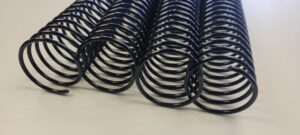
Spiral binding is an excellent way to create professional-looking books, reports, or notebooks right from the comfort of your home. Whether you are a student looking to bind your project, an aspiring author self-publishing your work, or simply someone who loves DIY projects, spiral binding offers a cost-effective and customizable solution. In this article, we will walk you through the steps to spiral bind a book at home.
Materials Needed:
- Your printed pages
- Spiral coils
- A paper cutter or guillotine
- A hole punch
- A ruler
- Pencil
- Scissors
- Cutting mat (optional)
- Front and back cover (if desired)
Step-by-Step Guide to Spiral Binding a Book at Home:
- Prepare Your Document:
- Start by printing your document, ensuring that the margins and layout are correct.
- If you wish to have a front and back cover, print them separately and set them aside.
- Trim Your Pages:
- Use a paper cutter or guillotine to trim the edges of your printed pages, making sure they are uniform and clean.
- Mark Hole Placement:
- Measure and mark where you want the holes for binding to be on the left side of your pages.
- Popular spacing is typically 4:1 pitch (four holes per inch).
- Punch Holes:
- Using a hole punch, carefully punch holes at the marked spots. Ensure that the holes are consistent across all pages.
- Prepare the Spiral Coil:
- Select an appropriately sized spiral coil that matches the length of your document.
- If the coil is too long, you can trim it using scissors (plastic) or wire cutters (aluminum, wire) to the correct length.
- Thread the Spiral Coil:
- Thread spiral through the holes in your document, starting from the one end and working your way through
- Close the Coil:
- Use needle nose pliers to give the end of the spiral a 90 degree bend/turn.
- Finish and Check:
- Ensure that the coil is securely closed, and all pages are bound together neatly.
- Flip through the pages to check for any misalignment or loose ends.
- Optional Finishing Touches:
- You can use a clear cover or plastic sheet to protect the front cover and create a more professional look.
Conclusion
Spiral binding a book at home is a satisfying and cost-effective way to create your own customized documents. With the right tools and careful attention to detail, you can achieve professional-looking results. Whether you are binding school projects, reports, or even your own novel, this DIY process allows you to take control of your bookbinding needs. Happy binding!